

Table of Contents
- Algolia vs OpenSearch vs ExpertRec: Technical Comparison
- Algolia: Managed Search with Fine-Grained Relevance Controls
- OpenSearch: Powerful Search Infrastructure for Engineering Teams
- ExpertRec: Ecommerce Search without Building the Entire Search Layer
- Search Analytics: From Queries to Revenue
- How Should Ecommerce Teams Evaluate Them?
The approach to eCommerce search has taken a whole new turn. If a customer is searching for “black running shoes under ₹3,000”, it’s not just about matching those words together. The search engine has to know all about the attributes, price constraints, customer intentions, deviations in spelling, and other parameters in order to show the right result.
Choosing the right search solution is no longer only about the speed of searching. Companies now need to keep in mind many things such as retrieval and ranking of results, query understanding, filters, suggestions, semantic search, and others.
Algolia, OpenSearch, and ExpertRec deal with this issue in their own way. Algolia has created an API-first search solution that is fully managed. OpenSearch is a search engine that is extensible.
Algolia vs OpenSearch vs ExpertRec: Technical Comparison
| Capability | Algolia | OpenSearch | ExpertRec |
|---|---|---|---|
| Search model | Managed search API | Open-source search engine | Managed ecommerce search |
| Keyword search | Yes | BM25 | Yes |
| Semantic search | Yes | Yes | Yes |
| Hybrid search | Yes | Yes | Yes |
| Typo tolerance | Built in | Requires configuration | Built in |
| Autocomplete | Built in | Requires implementation | Built in |
| Synonyms | Yes | Configurable | Yes |
| Faceted navigation | Yes | Yes | Yes |
| SKU search | Yes | Requires field/query configuration | Yes |
| Custom ranking | Yes | Highly configurable | Yes |
| Search analytics | Yes | Requires implementation/configuration | Built in |
| Merchandising | Yes | Custom implementation | Yes |
| Infrastructure | Managed | Self-managed or managed service | Managed |
| Engineering effort | Medium | High | Low to medium |
| Primary use case | Application search | Custom search infrastructure | Ecommerce product discovery |
Algolia: Managed Search with Fine-Grained Relevance Controls

It is built on a search API. Product data is indexed and accessed through search API endpoints, permitting applications to seek results without the need for any search cluster.
E-commerce infrastructure usually appears as below:
product database → indexing pipeline → Algolia index → Search API → storefront
The product record could contain certain fields:
- product_id
- title
- brand
- category
- description
- sku
- price
- colour
- size
- availability
- tags
Algolia’s ranking system utilizes the following elements in order to rank the products as per the customer’s query: spelling mistakes, words used, filters, distance, attributes, and exact match. In other words, Algolia enables controlling the product order for a particular query.

For instance, “iphne 15 case” should not lead to zero results simply because the query contains a misspelled word. Algolia is also moving towards AI-based retrieval, and its latest NeuralSearch technique combines keyword counting and meaning.
Nonetheless, it necessitates paying attention to usage patterns. Algolia’s pricing depends on the number of search requests and the total number of records. For a store having 200,000 products and 1.5 million requests every month, it becomes important to consider not only the subscription price but also the volume of indexing, the traffic caused by autocomplete, and other search activities.
As a result, Algolia suits those enterprises that require managed infrastructure while retaining control over search relevance and behavior.
OpenSearch: Powerful Search Infrastructure for Engineering Teams
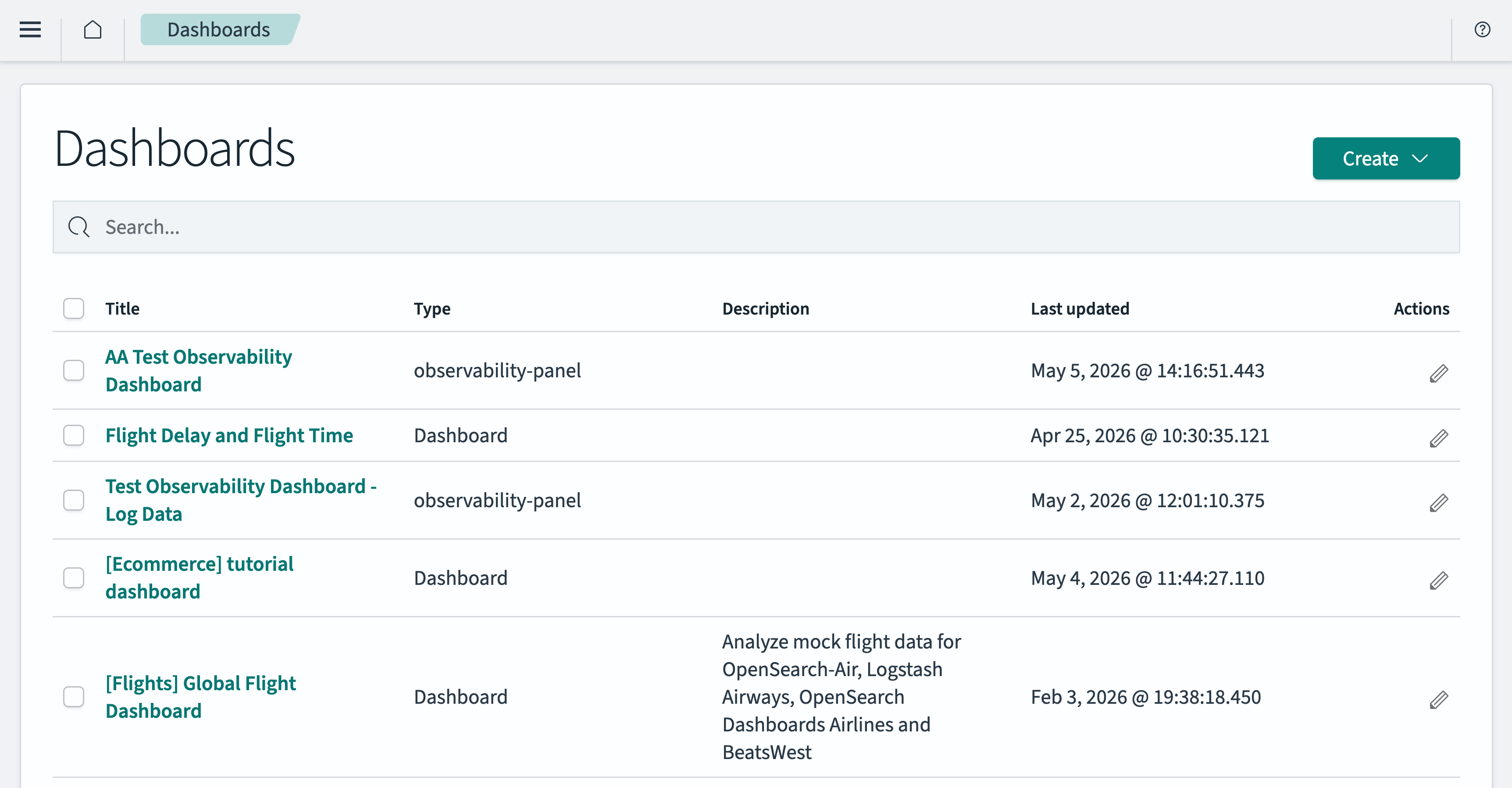
OpenSearch opts for a different approach.
Unlike other solutions providing a finished e-commerce search solution, OpenSearch gives a building block for developers to create their e-commerce search experiences from scratch.
OpenSearch’s classic lexical search is based on BM25, one of the most significant relevance algorithms utilizing various elements such as term frequency and inverse document frequency.
An architecture for this type of system could be represented like this:
ERP/PIM/Shopify → input pipeline → OpenSearch cluster → search service → shop

All ones involved have access to:
- Mapping of the index
- Tokenizers
- Analyzers
- Boosting of the field
- Filters
- Aggregation
- Shards
- Replicas
- Vector indexing
- Methods of ranking
- Search pipelines
OpenSearch can perform vector searching and k-NN retrieval procedures, which enables semantic search. Other possibilities of hybrid searching help to make use of either lexical or vector search results.
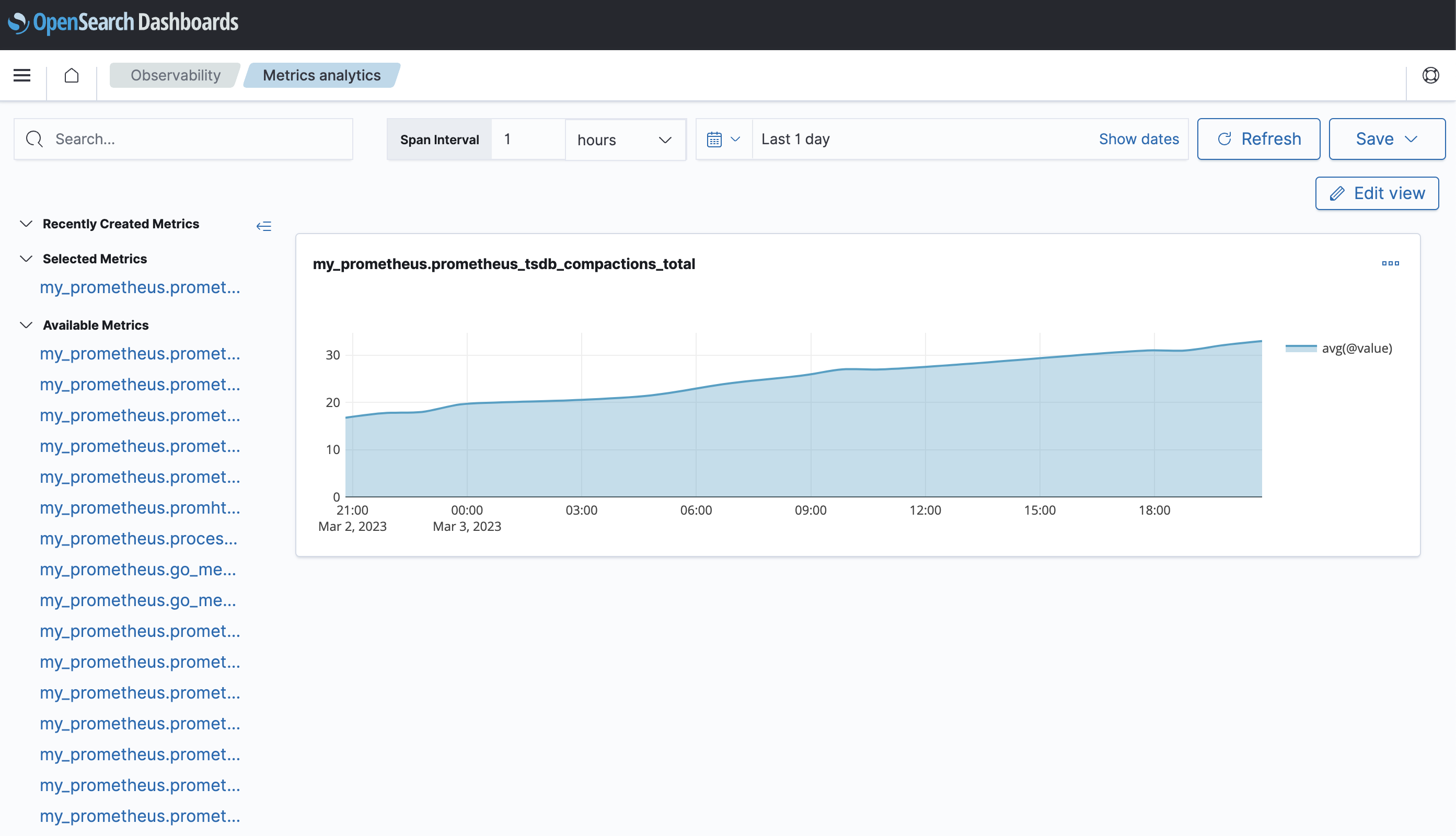
OpenSearch is of great importance when searching becomes an essential part of your technological solution.
But one specific thing should be emphasized: OpenSearch only gives you possibilities for the realization of the technology, and your business needs to create the search solution itself.
These technologies can include such functions as autocomplete, typo correction, merchandising options, synonym control, analytics dashboard, query parsing, relevancy testing, and monitoring.
For instance, a firm may choose not to acquire a search service but might still be spending about 40 engineering hours every month on maintaining the search infrastructure. Assuming a hypothetical cost of engineering of ₹2000 per hour, the effort of engineering will be ₹80,000 per month, minus the infrastructure costs.
The choice of whether or not to acquire the service should thus be made in the context of the total costs associated with maintaining the search.
Ecommerce Search & Product Discovery
AI-powered search • Autocomplete • Ecommerce product discovery
Improve your ecommerce search with ExpertRec
ExpertRec helps you implement intelligent autocomplete, typo-tolerant search, personalized results, and scalable server-side search — all without complex infrastructure or heavy development effort.
Quick setup • No coding required • Works on any website
ExpertRec: Ecommerce Search without Building the Entire Search Layer
ExpertRec is analyzing the situation from the perspective of product discovery.
The aim of an ecommerce company goes beyond simply finding documents; it is to help users find relevant items quickly while also giving enough power to merchants to achieve more effective searches.
ExpertRec offers capabilities like semantic searching, auto-suggesting, typo tolerance, synonym filtering, settings in search fields, ranking control, analysis, personalization, and merchandising.
Let’s say there is a fashion store that has 50,000 products.
If the buyer types:
“red party dress under ₹2,500,”
the search must take into account several criteria such as:
Query → intention → results selection → filter by attributes → rating → merchandise → results

In this instance, “red” is a color query, “party dress” means the intention behind the product, and “₹2,500” represents the price ceiling.
The same principle applies to searches based on SKU.
If the user types “SKU-AX1045,” the system should prioritize the specific SKU as opposed to using a generic search.
This illustrates how vital it is to be well prepared in terms of search fields. The importance of the product’s title, description, SKU, category, tag, and custom attributes in the search engines is variable among merchants.
For instance, retailers may want to focus more on SKU match than description match and put more emphasis on product title than on the natural language search.
Search Analytics: From Queries to Revenue
The search analytics space entails more than merely calculating search volumes for ecommerce teams. An efficient search system must address the following kinds of questions:
- Which queries yield no results at all?
- Which searches result in lots of clicks?
- How many search terms proceed to the add-to-cart process?
- How many search queries need to be modified?
- Which queries have the potential to generate revenue?
Therefore, one can see a well-structured process of
search query → result → click → add to cart → purchase → optimization of relevance.
For example, the phrase “wireless earplugs under ₹2,000” gives 15,000 searches a month with a low conversion rate, indicating that there are certain issues regarding either rankings, inventory, price, filters, or interpretation of the query.
Search analytics shows those problems, helping businesses avoid guessing.
How Should Ecommerce Teams Evaluate Them?
The answer lies in how much of the search stack a business wants to manage themselves.
OpenSearch works when the tech team wants to be in charge of indexing, analyzers, ranking, vector retrieval, and infrastructure.
Algolia is suitable for companies that need an advanced managed search API that has a range of sophisticated relevance settings, AI features, and flexibility from a developer’s perspective.
ExpertRec is relevant when one’s aim is to boost product discovery without building and maintaining the whole experience in-house.
The evaluation should take the technical aspects into consideration rather than just features.
It is important to look at the whole chain:
Query understanding → retrieval → ranking → filtering → merchandising → analytics → conversion
That’s what defines whether search will simply show products or help customers find what they want.


