

Table of Contents
- What is an AI product finder in Shopify?
- The Technical Difference: Keyword Search vs Intent-Based Retrieval
- Your Shopify Product Data Becomes the AI’s Raw Material
- Where ExpertRec Fits into Shopify Product Discovery
- Product Finder Should Also Learn From What Shoppers Search
- What is the cost of better product discovery?
- Shopify Native Search vs AI Product Finder
- The Real Goal: Better Matches, Faster Decisions, More Purchases
When it comes to e-commerce, customers are losing their patience with the conventional search engine systems. They do not want to spend their time figuring out the right keyword.
The customer may write:
“Looking for stainless steel lunch-box for office work, leak-proof, costing around ₹1500”.
This might not be a regular keyword query. It contains product name, material, purpose, desired features, and a budget range.
AI Product Finder for Shopify has been developed exactly for this kind of search.
In 2025, it was reported by Salesforce that 39% of the population was using AI for product discovery purposes. According to Adobe, website traffic from generative AI has increased by 4700% as compared to the year before as of July 2025. Clients who came from these sources spend 32% more time on the websites and view 10% more web pages.
For Shopify merchants, the question is no longer whether to implement AI technology.
They need to ask themselves if their product data and search system can convert the intention of their customers into the relevant products.
What is an AI product finder in Shopify?
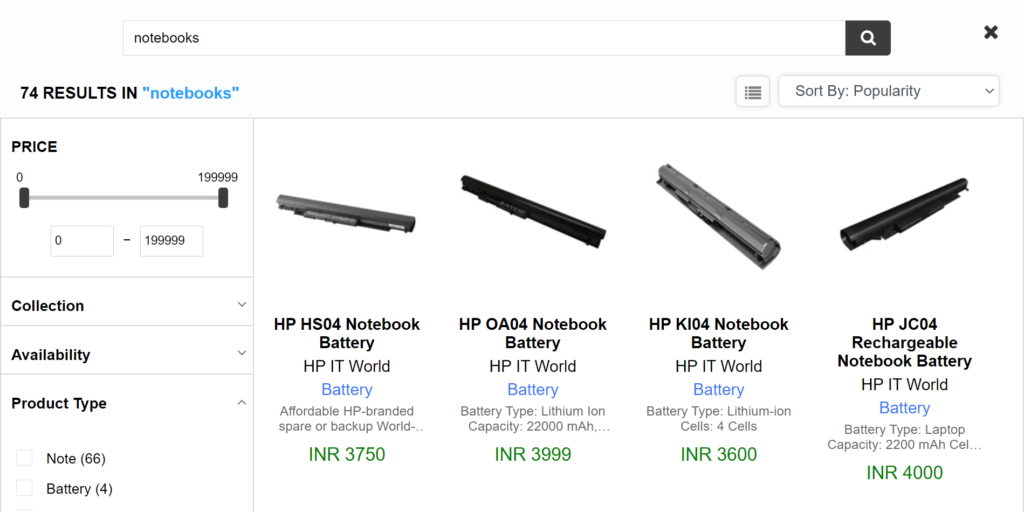
An AI product finder works between a customer’s search query and Shopify’s product inventory. Rather than simply depending on specific keywords, an AI product finder is able to analyze intentions, entities, characteristics, limitations, and context. For instance:
“Find a coffee machine for my small apartment below ₹12000”
An AI product finder will translate the search into:
- Product: Coffee machine
- Size/usability context: Compact/small apartment
- Cost limitation: ≤ ₹12000
- Intention: To buy
- Priority of items: All products meeting the various criteria.
Shopify has a great foundation for its search abilities. The Storefront API provides for product searching, relevance ordering, pagination, and product filtering.
The trouble arises when users stop using the exact terms listed in the merchant’s product catalog. That’s when an AI product finder comes in handy.
The Technical Difference: Keyword Search vs Intent-Based Retrieval
A simple search pipeline looks like this:
Search keyword → keyword matches → products found
Whereas an AI powered product finder works with a far more sophisticated search pipeline:
Search query → understanding → extracting attributes → retrieving candidates → ranking in relevance → applying business rules → obtaining products found
Let’s take this search: “Office chair for long working hours with back support within ₹10,000”
The search engine needs to decode multiple cues:
- Product called = Office Chair
- Use case = Long working hours
- Feature of product = back support
- Price constraint = below ₹10,000
- Intent = Purchase of product
Essentially it is more on the lines of semantic retrieval instead of just being keyword based.
The retrieval layer finds matches from the product catalog. The Ranking layer ranks the products in order of relevance.
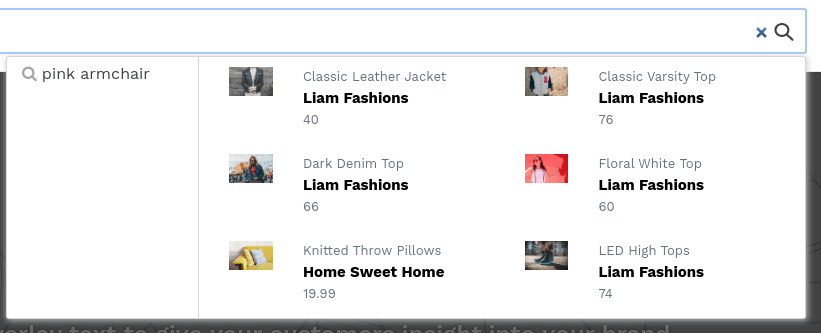 Rankings involve both textual relevance and semantic similarity signals as well as other signals like product features, availability, popularity, click behaviour, conversion behaviour and any applicable merchandising rules.
This difference is important because getting to 100 technically relevant items would be quite different from offering 5 items that are most likely to meet the needs of a customer.
Baymard’s research on Ecomm Search UX showed that 56% of the audited websites failed to support customer needs well enough.
Your Shopify Product Data Becomes the AI’s Raw Material
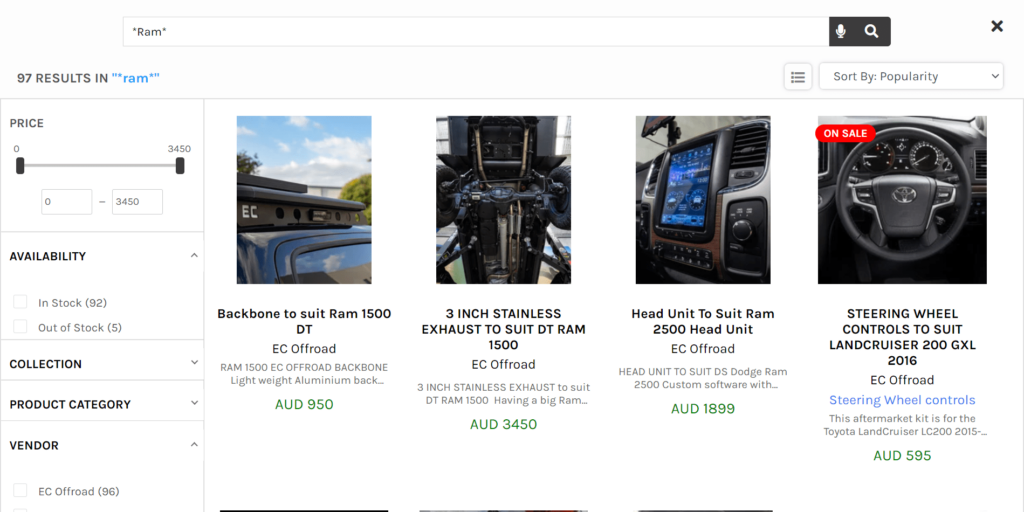
While AI is a remarkable tool, it cannot replace the problem with the product data.
Stores with a product catalog containing 5000 items but whose data includes unclear product details will render the AI product finder less useful.
Shopify offers a number of data signals that can help to make the search more efficient:
Name → description → product type → vendor → variants → tags → metafields → product in stock and price
Shopify allows using the metafields for products and product variants to save the structured data and enable more effective product searches.
For instance, if we take a furniture store having some structured features, like:
- Material: solid wood
- Seating: 3 people
- Room: living room
- Required assembly: yes
- Finish: walnut
- Maximum capacity: 250 kg
Then if the search query is “Three-seat wooden sofa for living room below 35,000,” the search engines will get the necessary information for filtering the products.
This suggests that catalog enrichment, taxonomy, consistency of attributes, and quality of metadata are becoming less of the merchandising tasks and more of the search-engineering tasks.
The AI-level solution is only as good as the product data that it is capable of interpreting.
AI-powered product discovery for Shopify
Turn Shopify Search into an AI Product Finder with ExpertRec
ExpertRec helps Shopify stores deliver semantic search, intelligent autocomplete, typo-tolerant search, product filters, recommendations, merchandising and search analytics — without complex search infrastructure.
AI search • Semantic discovery • Filters • Analytics
Where ExpertRec Fits into Shopify Product Discovery

This is where ExpertRec can fit naturally into a Shopify search architecture.
Here is a perfect example of where ExpertRec can naturally fit into the Shopify search setup.
ExpertRec has a smart search and discovery layer for Shopify, providing features such as semantic search, semantic autocompletion, tolerance of typos and synonyms, filtering, merchandising, and recommendations.
Take a beauty shop with 2,500 products. Let’s say a customer looks for:
Vitamin C serum for oily skin under ₹1,200.
Simple keyword search might only look for the term “Vitamin C serum.” However, the smart product-finding layer will take the request to analyze it as follows:
- Category: Serum
- Ingredient: Vitamin C
- Skin type: Oily
- Price: ≤ ₹1,200.
After processing this information, the search engine will narrow down products that fit these specifications.
This is what the same structure will do for queries like:
- Wireless earbuds for calls below ₹2,000.
- Travel backpack with laptop compartment for around ₹3,000.
- Cotton kurti for office wear of under ₹1,500.
- Kids study desk for a small bedroom.
- Non-stick cooking ware of induction stove.
The important thing is not just adding the word AI to the search bar but converting messy human language into structured searching signals.
Product Finder Should Also Learn From What Shoppers Search

Another crucial part of AI Product Finder technology that Shopify vendors frequently neglect is the use of search analytics.
Every internal search means that demand data comes directly from first-party.
For instance, the Shopify store has monthly search records:
- “waterproof laptop bag” – 2400 searches
- “gym bag with shoe compartment” – 1650 searches
- “formal shoes size 12” – 1120 searches
- “protein shaker 1 liter” – 940 searches
- “eco friendly gift below ₹1,000” – 780 searches
Analyzing search volume alone will not work.
Shopify merchants should analyze the entire funnel:
Search -> Click -> Add to Cart -> Checkout -> Purchase
By doing so, merchants will get answers to a wide range of useful questions:
- Which queries lead to the purchase?
- What searches did not produce results?
- Which products were shown but received no clicks?
- Which queries were popular but resulted in low sales?
- Which properties do customers request?
- Which synonyms should be used?
- Which items should be promoted against certain queries?
ExpertRec has search analytics tools able to assist vendors in understanding search behavior, pinpointing important queries, and optimizing the products based on real customer behavior.
The search process is presented as follows:
Customer search -> search results -> interaction -> analytics -> optimization -> improved retrieval
What is the cost of better product discovery?
Let’s take a hypothetical example where we have a Shopify store that receives 100,000 visitors per month.
Let’s further assume:
- 8% of these visitors use site search, meaning 8,000 search sessions took place.
- Search conversion rate is 4%
- Average order value is ₹3,500 → revenue attributed to search will be:
₹8,000 × 4% × ₹3,500 = ₹11.2 lakh a month
Now let’s assume better retrieval and ranking made search conversions improve by 20% (increase to 4.8% compared to the baseline of 4%).
Then revenue would be:
₹8,000 × 4.8% × ₹3,500 = ₹13.44 lakh per month
That is a difference of:
₹2.24 lakh per month, which is approximately:
₹26.88 lakh per year.
This is a simple illustration and does not guarantee the results by ExpertRec. Actual results depend on store’s search traffic and catalog quality as well as baseline conversion rate, average order value, margins and implementations.
Though it is obvious that general direction of e-commerce is evident in 2025 as Adobe reported that visits resulted from generative AI sources are 16% more likely to complete a purchase than visits coming from other sources of traffic and increase revenue per session by 8%.
If you are a Shopify merchant, you can now see that product discovery is getting more and more important.
Shopify Native Search vs AI Product Finder
Choosing between Shopify’s in-house search technology and ExpertRec does not have to be an either/or proposition.
Shopify’s Search & Discovery offers basic elements like product search, filtering, metafield-based discovery, history, autocomplete, typo handling, synonym support, recommendations, and relevance control.
With ExpertRec, you also obtain a major upgrade in semantic/ NLP-based discovery, search-analysis technology, advanced relevance control, merchandising, and recommendations, and search customization.
In general, Shopify’s built-in search tools work well for stores with simple product catalogs.
If a store has hundreds/thousands of SKUs, complex product features, frequent searches with internal search, SKU-based queries, search queries with natural-language, or a need for advanced search analysis/ relevance control – ExpertRec makes much more sense.
The Real Goal: Better Matches, Faster Decisions, More Purchases
An AI Product Finder should not be evaluated based on its chatbots’ sophistication.
Better questions include:
- Were the right products selected?
- Did the customer click on one?
- Did he or she add it to their shopping basket?
- Did he or she make the purchase?
- Were there fewer unanswered queries?
- Has the revenue generated by searches increased?
This is the distinction between adding a feature and actually improving product searches in Shopify.
For those who have large catalogs, ExpertRec offers a specific layer dedicated to searching and discovering products, which connects Shopify product data with semantical search, filters, relevance scoring, merchants, recommendations, and analytics of search.
As customers shift from searching with words to asking for products in natural language, a competitive edge will increasingly belong to Shopify stores with the knowledge to understand what the customer means rather than just what he/she types.


